

Wearable technology is moving away from being a futuristic concept or an occasional gadget for the select few to being the mainstream method of life for the people of the U. S. It started with a handful of smartwatches, observing your heart rate, but the technology just kept moving upwards with applications, enhancers, such as AR glasses. Touching on some points briefly on the recent trends, market insight, and why the wearable technology industry is so attractive to America.
Why Wearable Technology Is Booming in the U.S.
Many important factors are pushing the adoption of Wearable Technology in America:
Healthy & Preventive Care Boom
So many Americans have started asserting through their preferences on the seriousness of the subject of “health”. Following that, wearable devices continuously monitor their vital signs along with aspects like activity, sleep, and stress, which provide early detection and support informed data-driven lifestyle decisions via sheer perception.
Technological Developments
The growth of the wearable health technologies market has also been evidenced in countries like the United States, in the use of these solutions to enhance their health systems.
Artificial Intelligence is on the next big edge of innovation that will revolutionize healthcare.handleSubmit=Go&SearchPR=AI&Bot=false&page=AI_HealthcareBrains of startups use artificial intelligence to improve their already food delivery standards post-COVID-19.笑Brain of startups burns tons of money for fear of a future grand mal due to COVID-19 ravaging Earth.
Expanding into the Holistic
The health informatics-wise consumers are behind the surge of wearable health technologies in preference of people originally dipping their feet into the technological barrier of these innovative systems.
Keep the Middle Men Merry
More and more dollars are getting pumped into the startup world of wearable tech, particularly in health and AI. As funds scale and innovation is also accelerating, more and more high-end products are hitting the market.
Market Outlook: Big Numbers & Bright Growth
Let’s just take a look at some quick stats for a precise understanding of how huge this market is:
- Grand View Research suggests that the United States’ wearable technology market would touch the US $47,513.4 million (~US $47.5 billion) by the end of 2030, with an anticipated growth of 12.2% CAGR between 2025 and 2030.
- Grand View Research states a consensus that by 2030, the share of the global wearables market would stand at anywhere from US$84.2 billion in 2024 to US$186.14 billion.
- Research & Markets seems to have a positive outlook for wearables; by one forecast, it might touch US$230.15 billion by 2033 on account of widespread health implementation, integration of IoT, and improved sensor technologies.
This shows that wearable tech in the U.S. holds great potential for advancing both technology and daily health activities.
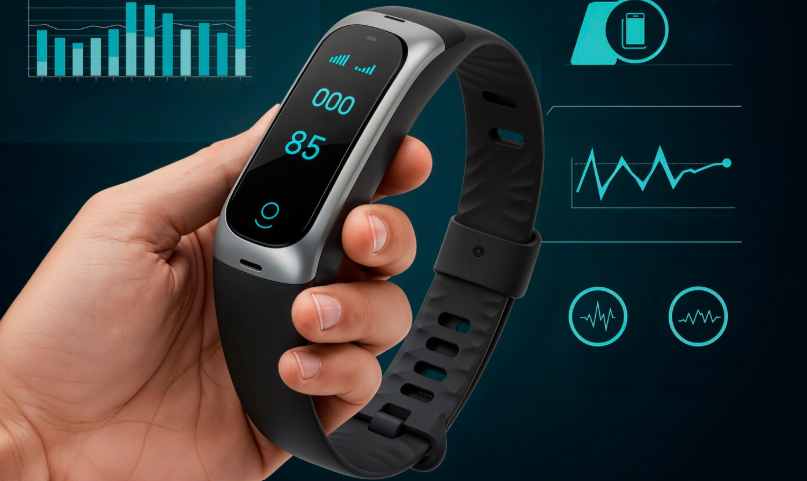
Top Trends in Wearable Technology (2025 Edition)
“Now, let’s explore some of the most exciting and fast-evolving trends in wearable technology, specifically highlighting trends that are capturing the attention of U.S. consumers:
High‑Performance Earables
“Earables”-that’s right, wearable devices you stick in your ear-are reaching high-performance levels extremely quickly. They are not just sticking to music but have hopped onto the health tracking train. They can track heart rate, find stress, and give real-time context-aware feedback. This converts them into a perfect, first-choice health companion.
AI-Enabled Wearables
Wearable BiHello! Thanks’ evolution today bears a touch of AI. For instance, Amazon is allegedly in the process of acquiring startup Bee, which creates an AI-powered wristband costing $50. This band can compile conversations heard into writing; he can perform selecting and make copies of amusing-to-do lists. This reveals a really opportune step towards smart and voice-triggered wearables.
Smart Glasses & AR
Meta recently launched the Oakley Meta Vanguard, smart glasses for athletes with a central action camera, enhanced speakers, and water resistance.
Meta is currently working on “Celeste” glasses, featuring a built-in display with AI, a further sign of AR becoming more consumer-ready.
Non-Invasive Health Monitoring
The advent of wearables is fast encroaching upon clinical-grade health monitoring. For example, research is going on into flexible and low-power wearables that will monitor real-time health metrics.
So far, linking wearable data with EHRs has improved large-scale predictions for diabetes, hypertension, and depression, showing strong potential for informed health outcomes.
Regulatory Evolution.
As wearables penetrate deep into the spheres of medical use, regulators worldwide are increasingly taking note of them. Wearable health devices sit between wellness gadgets and medical devices, prompting calls for a clearer, more nuanced regulatory framework.
Regulation can build confidence in the devices, which could work to raise their safety and adoption. This becomes more significant in the U. S. because of the massive health-data-privacy concerns there.
Emerging Form Factors
Innovation is no longer centered solely on smartwatches and earbuds but is also expected for smart rings, smart textiles, and wearable patches. The new forms must incorporate better functionality thanks to enhancements in the factors of design factors. Unlike the early technology adopters, widespread adoption could become a reality.
Real-World Applications: Wearable Tech Impact
Here are the primary areas in which wearable technology is fundamentally transforming the lives and labor of Americans:
- Personal Health & Wellness: Wearables are now essential tools to read vital signs, sleep patterns, stress levels, and daily physical activities.. Devices are also being promoted as “personal health coaches” as the AI is fine-tuned.
- Fitness: Smartwatches and fitness bands remain the in-thing and are useful in tracking workouts, prescribing exercises, and giving recovery insights.
- Medical & Remote Monitoring: Hospitals and telehealth increasingly use medical wearables to remotely monitor patients, especially those with chronic conditions like cardiovascular disease and diabetes.
- Productivity & Payments: Wearables now support contactless payments, notifications, and voice commands, reducing reliance on smartphones.
- Enterprise Use: Smart glasses and headsets are being integrated into the industrial environment of logistics, manufacturing, or field service settings in order to ease hands-free workflows and conduct AR-guided operations.
- Fashion & Lifestyle: Wearable tech is becoming edgy at promoting fashion rings, hybrids, and textiles that monitor health and sports some fashion accessories.
Though the outlook is bright, wearable technology is faced with major obstacles:
- Data Privacy & Security: Since wearables are all about collecting health data, the issue of protecting the data and making sure it is not misused remains a concern.
- Regulatory Complexity: A lot of health-centered wearable devices are obviously not complete products regulated as medical devices, implying a disparity in their efficiency and safety. Policymakers should provide more clarity therein.
- Battery Life Constraints: Additional sensors as data-gathering features and the integration of new computing power usually require a lot of energy, which many wearables are unable to cope with.
- User Comfort & Design: For wearables to be truly accepted at large, comfort should also comprise charm and appeal of good design, and it should be just as delightful functionally.
- Cost: High-end wearable devices are often too expensive for users primarily seeking medical-grade applications.
Why It Matters for Content Creators and Businesses
Wearable technology offers tremendous opportunities for anyone building a brand, blog, or startup:
- SEO Uses: There are many searches for topics like “wearable technology 2025,” “medical industry wearable technology,” and “AI smartwatches.” These topics are highly related to people who are interested in the United States and, hence, are more likely to draw more traffic for those keywords.
- Affiliate Marketing: There are so many smartwatches, aerospace devices, and smart rings you could look at or recommend for an affiliate program.
- Thought Leadership: Writing about regulation, ethics, AI in health wearables, and data privacy could position you as a trusted voice.
- Community: It is time to promote a partnership which focuses on creating a burgeoning enterprise to produce content or co-branded ventures.
Finally
Wearable technology is more than a gadget trend; it’s reshaping how Americans manage health, work, and tech, and with AI and sensor advances, it will become indispensable.
Every new idea in wearable tech presents an opportunity. Content creators and businesses can tap the growing U.S. market with high-quality, data-driven, SEO-optimized content backed by credible research.