
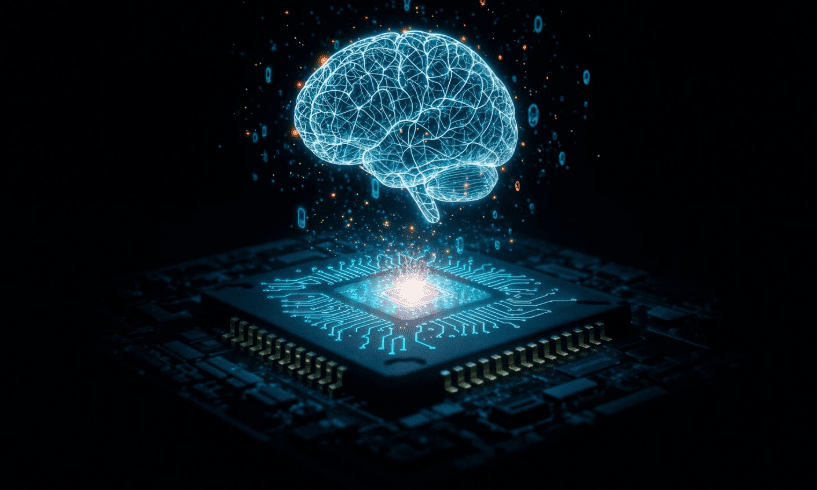
The realm of technology is developing at machine-gun speed, and one of the fastest and friendliest bayous of employment for superintelligent beings is neuromorphism. With the United States remaining at the fore in artificial intelligence along with HPC research, allied by anyone, neuromorphs are rigged to distort what machine information formation is all about properly. Unlike the old kind of parallelism cherished in traditional architectures, neuromorphs were, let it be reiterated, passionately promulgated with an additional human brain in mind. This conveys high-speed efficiency and adaptability beyond the fathomable universe. The subsequent paragraphs discuss what neuromorphic computing is, its advantages, applications, drawbacks, and its impending revolution.
What is Neuromorphic Computing?
Neuromorphic computing represents an architecture of computing that simulates the structure and operation of the human brain. Contrast that with classical computers, which take a serial approach to information processing. Networks of artificial neurons and synapses allow neuromorphic systems to process data in parallel, thereby allowing these systems to perform complex tasks in a more efficient way and with minimal energy consumption.
That is why neuromorphic computing allows machines to “think” like humans, so they thus perceive decisions, learn from experience, and adapt themselves to new situations in real time.
How Neuromorphic Computations Differ from Traditional Computations
Traditional computers depend on von Neumann architecture, where memory is different from the processing unit. This design halts the speed of the processing unit, especially in AI and data-heavy tasks, because it involves a constant process of transferring data from memory to the central processing unit. Neuromorphic computing, on the other hand, combines memory and the processing levels inside artificial neurons, thereby resulting in a faster, more energy-efficient computation.
Key Differences
| Feature | Traditional Computing | Neuromorphic Computing |
|---|---|---|
| Architecture | Sequential (CPU & Memory separate) | Parallel, brain-inspired neural networks |
| Energy Efficiency | Moderate to high energy consumption | Extremely low energy usage |
| Adaptability | Fixed algorithms | Learns and adapts over time |
| Task Suitability | Best for structured tasks | Ideal for AI, pattern recognition, and sensory processing |
A BRIEF ANALYSIS OF THE TYPOLOGY: THE U. S. APPLICATIONS OF NEUROMORPHIC COMPUTING
The U.S. leads not only in studying but also in commercializing neuromorphic and embedded computing. Moreover, there are innumerable opportunities for applications across various sectors, ranging from healthcare to autonomous systems. For instance, a few of the best examples of their utility are:
Artificial Intelligence and Machine Learning
Targeting far better acceleration for AI training & inference will be neuromorphic computing. Essentially, it imitates brain-like architectures so that AI models can compute massive amounts of unstructured data in a much more efficacious manner. It is, therefore, increasingly incumbent upon U. S. technology investments and research establishments to explore neuromorphic chips for their energy-saving and AI capabilities.
Robotics and Autonomous Systems
Real-time data shows that robots and self-driving vehicles heavily rely on neuromorphic computing. Neuromorphic supercomputers learn faster or adapt more quickly for the safety of the robots and their easy adaptability in harsh settings. Therefore, on the sociotechnical level, developers of neuromorphic systems are testing for quicker and superior decision-making whenever their focus shifts from drones, cars, and other industrial robots.
Healthcare and Medical Devices
The application of neuromorphic systems in healthcare facilitates smart prosthetics, brain-machine interfaces, and diagnostic AI. For example, neuromorphic chips process neural signals closer to the natural way they are processed. Consequently, prosthetic limbs that respond more naturally and well to human intentions are developed. As a result, health tech startups in the U. S. are eagerly involved in this area to maximize patient outcomes.
Cybersecurity ×
With the growing complexity and velocity of cyber threats, neuromorphic computing is offering some sort of adaptive threat detection. Simply put, it can identify traffic network anomalies, predict forthcoming attacks, and react quickly to the same. Therefore, hacking infrastructure in the U. S. gains immensely from neuromorphic equipment.
Internet of Things (IoT)
Most of the time, IoT devices require very efficient and low-powered computing to run continuously. Neuromorphic chips are enabling sensors and edge devices to carry out processing locally and free from cloud subsidies. As an upshot, there is a substantial cut in latency and energy intensities. In the U. S., the smart home and industrial IoT industries are users of this technology in producing smarter and energy-efficient systems.
Benefits of Neuromorphic Computing
Building upon the foregoing, it is clear that the positive impacts of neuromorphic computing are, indeed, tremendous, especially with respect to U.S. industries and society at large.
- Recently, it has been observed that neuromorphic operating systems demand less power as opposed to traditional AI parts, hence they are favorable for the environment and economically viable.
- Real-Time Facility: Neuro-synaptic chips have the same advantage of making decisions at a much faster level because they carry out parallel operations.
- Adaptive Ability: These systems are able to learn from new data, showing adaptation points much closer to our own cognition.
- Advanced AI Abilities: With greater strengths in patterning, sensory progression, and unstructured data processing, the synergetic neuromorphic systems make AI look more consolidated and efficient.
- Scaling Possibilities: Neuromorphic architectures can scale from small, edge-based devices to supercomputers. Another mark of the versatility of this technology is the variety of potential applications of a neuromorphic computing tool.
Foreseen challenges and limitations
Despite some promising factors, neuromorphic computing has to overcome several challenges:
- Hardware: Developing reliable neuromorphic chips is an expensive and complex process.
- Software Ecosystem: Neuromorphic programming, in contrast to conventional programming, clearly points to a significant departure, thereby creating an urgent need for newer tools and frameworks.
- Integration: It appears, therefore, to be a noteworthy challenge for U.S. companies to successfully integrate neuromorphic systems with the prevalent infrastructures, particularly because existing setups may not readily accommodate such advanced technologies.
- Commercialization Limited: While the prospects for large-scale commercial use are bright enough, commercial adoption is still at an embryonic stage.
It implies that only if the challenges are overcome, neuromorphic computing could unfold on a vast magnitude within the U. S. market.
How U. S. Companies Can Utilize Neuromorphic Computing
Neuromorphic computing is more than just some research concept for any U. S. company; in fact, it represents a competitive edge. There are a few gestures businesses can make to conserve it:
- Investment in Research and Development: Work together with universities and AI labs to find out about neurochip technologies.
- Pilot Projects: Go for small neuromorphic projects done in AI, Robotics, or IoT.
- Develop Talent: Train engineers and data scientists in neuromorphic programming and architecture.
- Collaborate with Chip Companies: Partner with organizations that produce neuromorphic processors for keeping an edge.
- Industry Trend Watching: Keep an ear to the ground on telltale technical developments and industry reports related to the U. S. regarding neuromorphic.
By working with a strategic perspective, American companies can therefore leverage neuromorphic computing to not only enhance efficiency but also foster innovation and, consequently, strengthen competitiveness.
The Neuromorphic Computing Future in the U.S.
The future developments in the U. S. for neuromorphic computing are highly encouraging. With a large number of investments from industry giants, startups, and federal research bodies, neuromorphic systems keep being lifted from experimental laboratory works to real-world applications. Neuromorphic computing has been predicted to take center stage within the next decade as a technology for transforming AI, robotics, healthcare, cybersecurity, etc.
Eventually, amid increasing emphasis on energy efficiency, U. S. industry will be driven to adopt neuromorphic systems in order to roll out sustainable, high-performance computing solutions. By joining the ranks of brain-inspired architectures and cutting-edge AI, neuromorphic computing is on course to be the tech world’s next big disruptor.
In Conclusion
Neuromorphic computing fundamentally alters how machines interact with information and capitalize on it. This technology uniquely excels in efficiency, adaptability, and intelligence systems based on the functioning and structure of the human brain. Many U. S. industries, from healthcare to autonomous vehicles, cybersecurity, IoT, and so on, stand to benefit significantly from it.
Like those of hardware complexity, software maturation, and commercialization, there remain a great many challenges to overcome for neuromorphic computing. However, the potential benefits warrant its immense focus by research, industry, and potential politicians alike. Therefore, adorning itself with neuromorphic technology from inception would be an excellent tactic for any business to stay ahead in an AI-driven economy.
Embracing neuromorphic computing is not merely an opportunity for the United States, which has been in the vanguard of technological innovation; it is, in fact, an obligation for the future development of AI, computing, and intelligent systems.